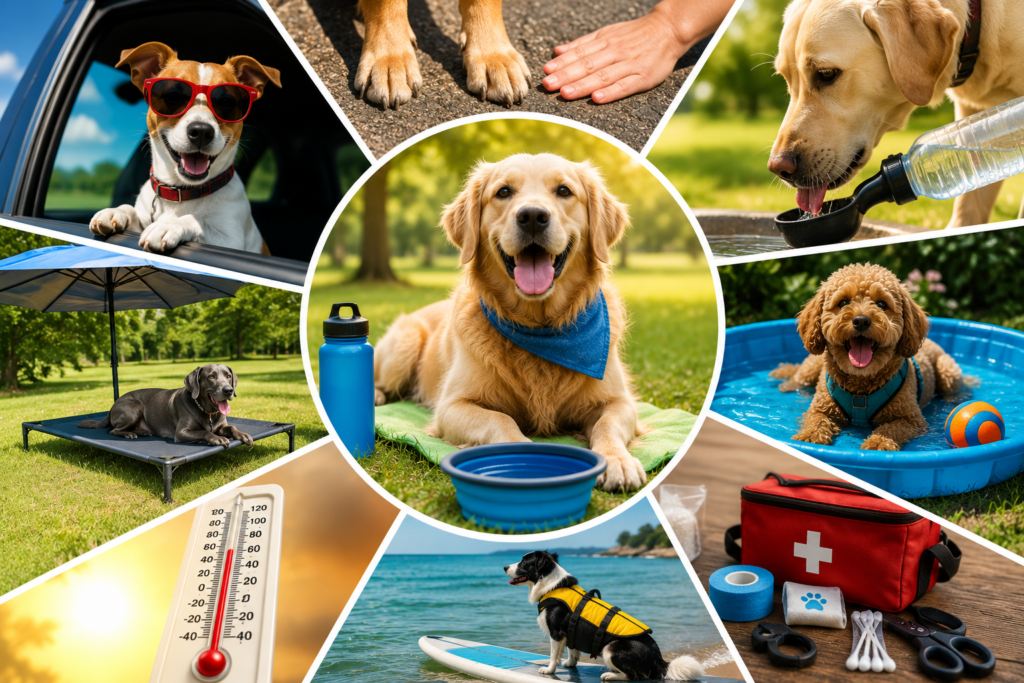
summer safety surrounding a dog in the middle of the safety items

Introduction: The Importance of Summer Safety for Dogs

Bookmark this guide and keep it handy all summer long. It brings together practical tips to help you and your dog enjoy warm-weather adventures safely.

As the summer months approach, the welfare of our canine companions must take center stage. With rising temperatures, dog owners face the pressing responsibility of ensuring their pets remain safe and healthy during these sweltering days. High temperatures can lead to an array of health concerns for dogs, including heatstroke, dehydration, and sunburn, making it crucial for owners to be vigilant about their dog’s comfort.

Dogs are inherently susceptible to overheating, given their inability to sweat like humans do. Instead, they primarily rely on panting to regulate their body temperature, which may not always be sufficient during extreme heat. Furthermore, certain breeds are more at risk for heat-related illnesses than others, particularly those with shorter snouts or thick fur coats. It is imperative that dog owners recognize the signs of heat stress—excessive panting, lethargy, or disorientation—and take immediate action to alleviate the situation.

Moreover, the summer environment presents additional challenges beyond just heat. Activities such as trips to the beach or hikes can expose dogs to hot pavement, harmful substances like sunscreen or pool chemicals, and other environmental hazards. Dog owners must ensure that their pets have access to shade, fresh water, and safe spaces to cool down. Proactivity in planning outings, understanding the signs of distress, and preparing for heat-related emergencies can greatly enhance a dog’s summertime experience.

In light of these considerations, it is clear that summer safety is not just a luxury but a necessity for dog owners. By taking the appropriate measures, we can ensure that our dogs enjoy the summer months as much as we do, keeping them cool and safe while avoiding the dangers that high temperatures can pose.

25 Essential Summer Dog Safety Tips

  1. Walk during cooler hours.
  2. Always carry fresh water.
  3. Bring a collapsible water bowl.
  4. Check the pavement temperature.
  5. Watch for signs of overheating.
  6. Provide plenty of shade.
  7. Take frequent cooling breaks.
  8. Never leave your dog in a parked car.
  9. Use a properly fitted life jacket around water.
  10. Protect your dog’s paws.
  11. Know your dog’s heat tolerance.
  12. Keep exercise shorter on hot days.
  13. Choose shaded trails.
  14. Check for ticks after hikes.
  15. Bring a basic pet first-aid kit.
  16. Pack healthy treats.
  17. Brush your dog’s coat regularly (without shaving breeds that shouldn’t be shaved).
  18. Use cooling strategies when needed.
  19. Protect dogs with short noses from overheating.
  20. Travel safely with your dog in summer.
  21. Keep fresh water available in the backyard.
  22. Watch humidity as well as temperature.
  23. Keep your ID tags up to date.
  24. Download your free Summer Dog Checklist.
  25. Know when it’s time to call your veterinarian.

Dog Summer Safety: Understanding Heat Stress and Symptoms

Heat stress in dogs is a serious condition that occurs when a dog’s body temperature rises beyond its normal threshold, typically around 101 to 102.5 degrees Fahrenheit. This increase in temperature can result from prolonged exposure to high ambient temperatures, strenuous physical activity, or inadequate access to fresh water. In essence, heat stress arises when dogs are unable to effectively cool themselves down through methods such as panting or finding shade. Understanding the underlying mechanisms of heat stress is crucial for dog owners, particularly during the warmer months.

The dangers of heat stress can be severe and even life-threatening. Dogs do not sweat like humans do; instead, they primarily regulate their temperature through panting. However, in extremely high temperatures or during exertion, this natural cooling method may become insufficient, causing body temperature to escalate rapidly. If not addressed promptly, heat stress can progress to heat exhaustion or heat stroke, conditions that result in severe internal damage and potentially death.

Identifying the symptoms of heat stress can be pivotal in safeguarding your dog’s well-being. Common signs to monitor include excessive panting, drooling, increased heart rate, lethargy, and a bright red tongue. Additionally, dogs may exhibit signs of distress such as whining or seeking cooler surfaces to lie on. In more severe cases, symptoms can advance to staggering, collapse, or even seizures. It is essential for dog owners to remain vigilant, especially during outdoor activities or during peak heat hours. Knowing these symptoms allows owners to act swiftly, providing immediate care and facilitating a safer summer for their furry companions.

Hot Weather Dog Care: Hydration Tips

During the hot summer months, maintaining proper hydration for your dog is critical for their health and overall well-being. Dogs, just like humans, can suffer from the adverse effects of dehydration, which may lead to serious health issues. It is essential to ensure that your dog always has access to fresh, cool water to keep them hydrated throughout the day.

One effective way to encourage your dog to drink more water is by providing multiple water bowls in different locations around your home and yard. This approach ensures that your dog has easy access to water at any moment, reducing the likelihood of them becoming dehydrated. Additionally, consider using stainless steel or ceramic bowls as they help keep water cooler compared to plastic. Always remember to wash the bowls regularly to prevent bacteria buildup.

Another useful tip is to add ice cubes or even prepare ice chips made from chicken or beef broth to enhance your dog’s drinking experience. Many dogs enjoy this refreshing treat, which can encourage them to consume more water. Alternatively, pet-friendly fruits such as watermelon can be offered to hydrate your dog while providing a tasty snack.

It is equally important to monitor your dog for signs of dehydration, especially in high temperatures. Key symptoms may include excessive panting, lethargy, dry gums, and loss of skin elasticity. If you observe any of these indicators, it is crucial to provide your dog with water immediately and consult a veterinarian if symptoms persist. Prevention is always better than cure, and making hydration a priority will ensure that your dog remains safe and comfortable during the sweltering summer heat.

Ideal Outdoor Activities for Hot Weather

As temperatures rise during the summer months, it is essential to plan outdoor activities for your dog that prioritize their health and safety. Not only can excessive heat lead to overheating and dehydration in dogs, but it can also limit their enjoyment of outdoor excursions. Fortunately, there are various engaging activities that can be pursued while minimizing heat exposure.

Consider early morning or late evening walks when temperatures are cooler. These time slots not only provide a comfortable environment for your dog, but also allow for enjoyable exploration. It is advisable to stick to shady paths or grassy areas, where the ground temperature is lower, reducing the risk of burns on your dog’s paws.

Another excellent outdoor activity is a splash pad or dog-friendly pool day. Many dogs adore the water, and a trip to a dog-friendly water facility can offer both fun and exercise without excessive heat. If you have your own pool, supervised swimming sessions can be refreshing and provide a cooling experience. Just ensure to monitor your dog for any signs of fatigue.

Engaging in training sessions in shaded areas can also be a productive way to enjoy the outdoors. Not only does this keep your dog mentally stimulated, but it reinforces obedience while avoiding the heat. Incorporating interactive toys that can be used in shaded spots, such as frisbees or floating toys for water play, can further enhance your dog’s summer experience.

Moreover, consider seasonal canine sports, such as agility training or scent work, where activities are performed in the cooler parts of the day. These sports are not only enjoyable but also promote exercise without succumbing to the heat.

Ultimately, choosing outdoor activities that keep your dog cool and safe during the summer will ensure they remain happy and healthy all season long. Remember to hydrate your dog frequently and always keep an eye on their behavior for any signs of overheating.

Dog Summer Safety at Home: Creating a Cool Environment

Maintaining a comfortable living space for your dog during the sweltering summer months is essential for their well-being. One effective way to achieve this is by utilizing fans strategically throughout your home. Ceiling fans can help circulate air, while portable fans can provide targeted cooling in specific areas where your dog spends the most time. Consider positioning a fan near their favorite resting spot, ensuring it is secure and will not tip over.

Another important method is the use of air conditioning. If you have central air conditioning, make sure to set it to a temperature that is pleasant not only for yourself but also for your dog. Dogs can overheat quickly, so keep the air conditioning running when temperatures rise significantly. For those without central air, window units or portable air conditioners can serve as excellent alternatives to keep the room temperature manageable.

In addition to mechanical methods, consider using reflective window treatments or shades to block out direct sunlight. By minimizing heat from sun exposure during peak hours, you can create a cooler atmosphere inside your home. This can be particularly effective in rooms where your dog spends a large proportion of their day.

Another tip is to provide them with cooling mats or elevated pet beds, as these can help maintain their body temperature by promoting better air circulation around their bodies. Ice packs wrapped in towels can also offer a refreshing option for your dog to lie against during the hottest parts of the day.

Utilizing these strategies will not only help in creating a cool living environment but also enhance the overall comfort and health of your dog throughout the summer season.

Canine Summer Safety: Grooming for Warm Months

During the hot summer months, grooming plays a significant role in helping dogs maintain a comfortable body temperature. Regular grooming not only contributes to the overall cleanliness of your dog but also impacts their ability to regulate heat. Brushing your dog frequently can remove loose fur, dirt, and debris, preventing matting that can trap heat against their skin. For many breeds, especially those with thicker coats, regular brushing is essential to allow air circulation that helps cool them down.

Additionally, the type of haircut your dog receives can greatly influence their comfort in warmer weather. For instance, dogs with long, dense fur may benefit from a summer trim. However, it is important to consult with a professional groomer who understands the specific needs of your dog’s breed. Certain breeds, like Golden Retrievers and Siberian Huskies, have double coats that require different grooming techniques compared to single-coated breeds like Beagles or Poodles. When grooming is done properly, dogs can enjoy better air circulation, which helps in dissipating heat.

Moreover, the temperature of the grooming environment is also important. When grooming your dog in a hot climate, try to use shaded areas or air-conditioned spaces to keep them cool. It is also advisable to bathe your dog with cool water prior to grooming. This can help them feel refreshed and comfortable during the grooming process. Remember that grooming should be a positive experience for your pet, so always use gentle methods and rewards to create a pleasant atmosphere.

In conclusion, proper grooming techniques are vital in ensuring your dog remains cool during the summer heat. By adopting a consistent grooming routine, selecting appropriate haircuts for your dog’s breed, and maintaining a comfortable environment, you can significantly enhance your dog’s ability to cope with higher temperatures.

Signs Your Dog is Overheated and What to Do

As temperatures rise during the summer months, it is essential for dog owners to be vigilant about their pet’s well-being. Overheating can lead to serious health issues in dogs, and recognizing the signs early is critical. Some of the primary symptoms of overheating include excessive panting, drooling, weakness, and a rapid heart rate. If you notice your dog acting unusually lethargic or disoriented, these could be indicators of heatstroke. Additionally, look for other signs like a bright red or pale tongue, vomiting, and even collapse in severe cases.

When you suspect that your dog is overheating, it is crucial to act swiftly. First, move your pet to a cooler environment immediately, preferably indoors or in a shaded area that is well-ventilated. This can significantly help to lower their body temperature. Providing fresh, cool water is equally important; however, ensure that they drink slowly to avoid any potential stomach distress.

If your dog seems to be suffering from heat-related symptoms, you can also apply cool—not icy—water to their body, focusing on the neck, paws, and groin areas. Using a wet towel or a spray bottle can be effective. Avoid using ice packs directly on their skin as it can constrict blood vessels and trap heat. Continue to monitor your dog closely, checking for improvements or any signs of distress. If symptoms do not improve within 10-15 minutes, or if your pet exhibits severe symptoms like seizures or collapse, it is imperative to seek veterinary attention immediately.

Ensuring your dog stays hydrated and cool during the summer months is essential. Being aware of the signs of overheating and knowing the appropriate responses can make a significant difference in your dog’s health and safety.

Protecting Paws: The Risks of Hot Surfaces

During the summer months, owners must be vigilant about the heat, particularly concerning hot surfaces such as pavement and sand that can pose a significant risk to their dogs’ paws. When exposed to high temperatures, these surfaces can reach dangerously warm levels, potentially leading to pain, injury, or even severe burns on a dog’s paw pads. It is essential to recognize that a dog’s paws are quite sensitive, making them susceptible to extreme heat.

One of the best practices for pet owners is to perform the “five-second test.” This simple method involves placing the back of one’s hand against the pavement or ground for five seconds. If it is too hot for a human hand, it is definitely too hot for a dog’s paws. During hot days, it is advisable to walk dogs during the cooler parts of the day, like early mornings or later evenings, to minimize their contact with scorching surfaces.

Additionally, owners can consider alternatives such as dog booties, which provide an effective barrier between hot surfaces and the dog’s paws. These booties are designed specifically for comfort and protection, ensuring that dogs have an easier time navigating hot terrains. If booties are not suitable, pet-safe paw wax is another option. This product can create a protective layer that helps shield against heat and other elements on the ground.

Furthermore, agility training on softer surfaces like grass or shaded pathways can be beneficial for energetic dogs who need to exercise while minimizing any risk to their paws. Always keep an eye on your dog while walking on hot surfaces, and watch for signs of discomfort or distress.

By understanding the risks associated with hot surfaces and taking proper precautions, dog owners can help ensure that their pets enjoy a safe and comfortable summer experience.

When and Where to Avoid Taking Your Dog
During the peak summer months, it is crucial for dog owners to be vigilant about both the timing and the location of outdoor activities. The heat can be particularly detrimental to dogs, who are more susceptible to overheating than humans. Consequently, planning outdoor excursions during the coolest parts of the day is advised. Mornings before 10 a.m. and evenings after 7 p.m. tend to offer more comfortable temperatures, thus reducing the risk of heat-related issues.

Moreover, certain places should generally be avoided when temperatures rise. Locations such as asphalt or concrete surfaces can reach extreme temperatures that may burn a dog’s paw pads. Test the ground with your hand; if it’s too hot for your skin, it certainly is for your pet. Parks with minimal shaded areas may not provide adequate respite from the sun, making them less ideal for summer outings.

Furthermore, it is wise to steer clear of crowded events or dog parks during peak heat, as overheating can be exacerbated by physical exertion and stress from heavy traffic of people and dogs. Over-stimulation, along with high temperatures, can lead to complications for your dog’s well-being.

Additionally, monitoring your dog’s behavior is fundamental. If your pet appears lethargic, restless, or reluctant to move, these could be signs of discomfort or overheating. It is essential to have a planned activity that includes breaks for hydration and rest. Understanding when and where to avoid taking your dog during summer heat can significantly diminish the risk of heat-related illnesses and ensure a safe summer experience for your furry friend.